Fellow Reflections: Juan Rúa-Serna
By Juan Rúa-Serna (Spring 2026 Seminar Fellow)
Growing up in Latin America, I had very few chances to learn something about China. The chances were even rarer if you grew up in Colombia, a country that very early in its history adopted a foreign policy strictly focused on looking “up” to the United States. A foreign policy coined in nice, solemn Latin wording, if there were any doubt about what serious, what deep, what rooted in our souls that was meant to be: Respice polum: the “Polar Star” doctrine. In public schools (the ones I attended), China appeared as a historical entity. That is: never as a relevant, present power, but as something with an interesting, exotic past. You learned about Chinese “dynasties”- what an intriguing word that was for a kid. This was the 90s; the US had won the Cold War, and naturally, a Latin American country would only think about, teach about, and look up to the new sole great power. But this remained the same throughout my undergraduate studies and later during my master’s. Even as the world changed, our thinking remained the same: the US this, the US that, the US this other intervention, policy, order, configuration and reconfiguration, attack, defense, support, threat. China was emerging and appearing as a great power in the international system, but not in our classrooms.
My Ph.D. studies have allowed me to start filling this immense gap. This spring, I had the opportunity to be a China at CUNY Seminar Fellow. Over the course of a few months, this experience helped me engage with a community of scholars who take the practice of thinking, reflecting, and teaching about China very seriously.
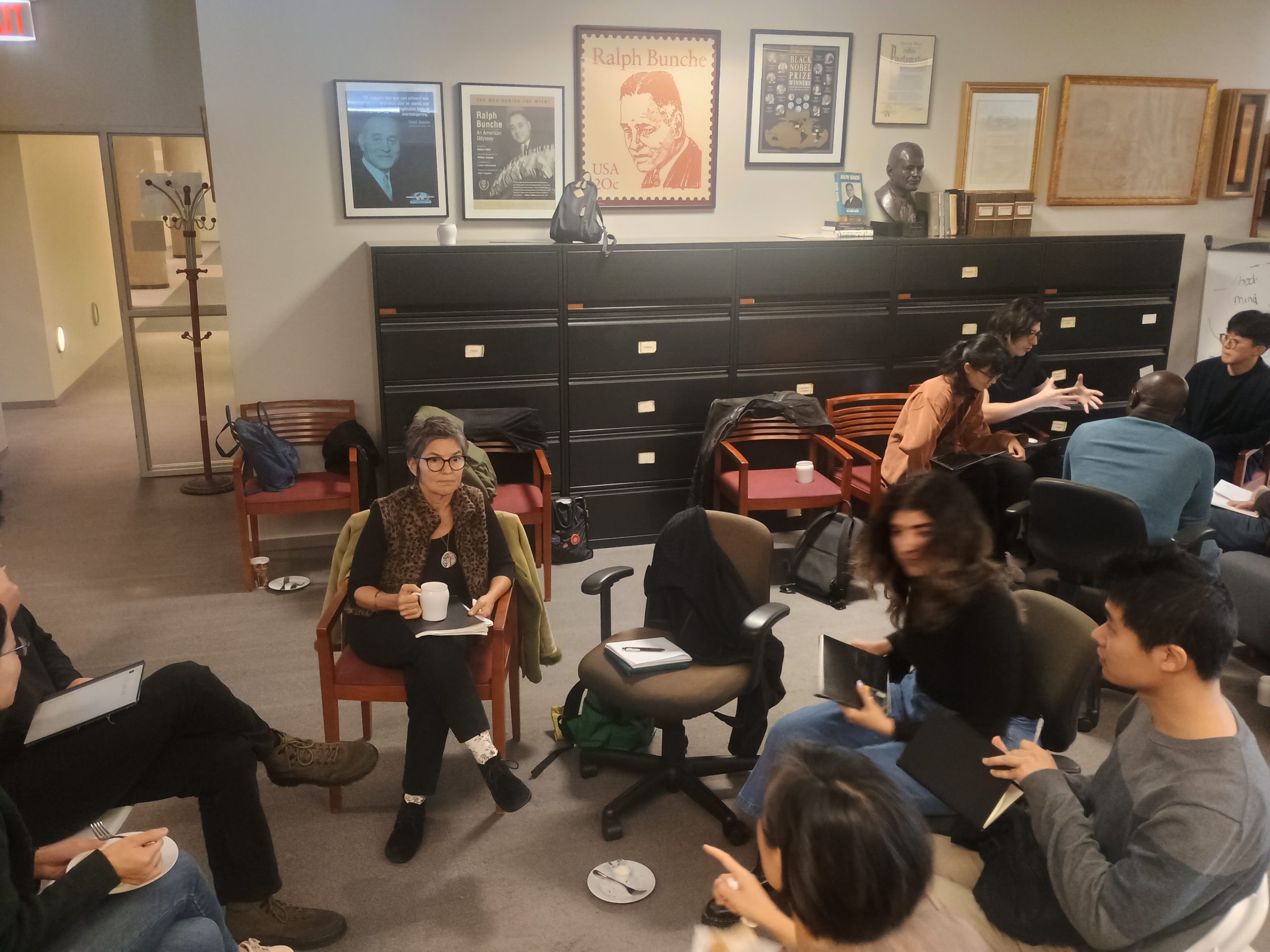
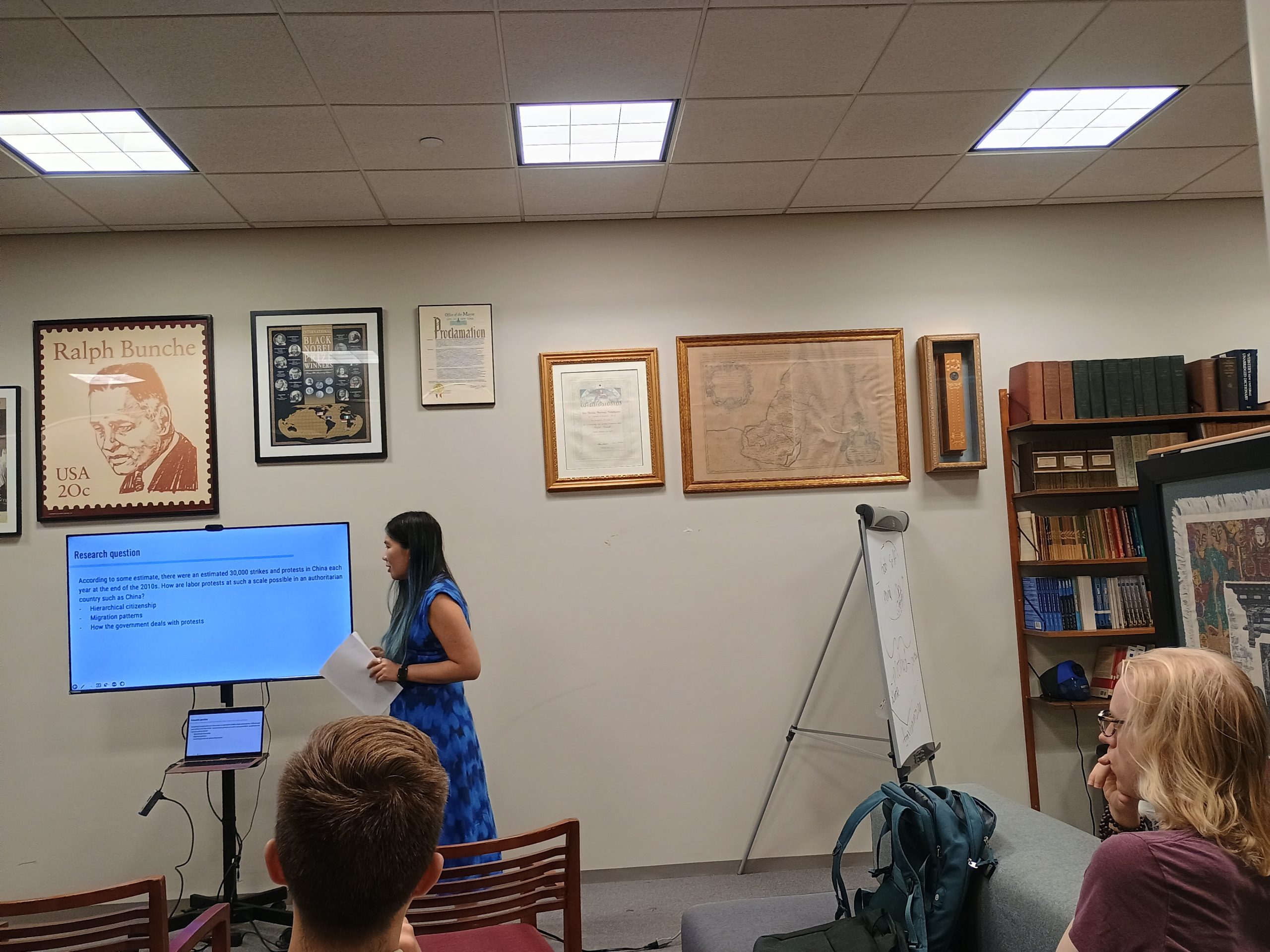
I was interested in learning about the Chinese perspective on immigration, and early in the semester, I had a chance to hear about the Hukou system. This is a system in which household registration records make people citizens of the province they inhabit, a sort of welfare subnational citizenship, very different from the Western idea of full national citizenship, a system dictating your legal rights, governing access to public services, to health care, to education. The CACI sessions are so powerful because of the different approaches to thinking about one issue: Professor Ruan presented insights on the Hukou system from his own research, and then all teaching and seminar fellows proposed insightful questions and presented their own thoughts and knowledge, enriching the conversation and providing us with an inviting space to talk about something so new, so little known for us.
That was precisely one of my favorite features of the fellowship: learning from many different people, especially from other fellows. We had the opportunity to attend, as observers, a class designed by one of the teaching fellows. This is particularly useful if you’re at the beginning of your teaching journey—as I am—and feeling a bit worried about what is coming, unsure how students will behave, and anxious about the whole experience. Having the chance to see someone else, someone pretty much like you, doing exactly what you are about to do, has a reassuring effect. It provides you with highly practical tips on what to do and how to manage a classroom, while also introducing you to new resources and ideas. During the fellowship, I received my upcoming teaching assignment. I will be teaching Democracy and Its Critics. The class I attended as an observer took a comparative approach to the West’s liberal democracies and China’s meritocratic system, following Daniel Bell’s The China Model: Political Meritocracy and the Limits of Democracy. I was there not only as a passive observer but also as an active learner, and I gained a wealth of insights from my colleague’s approach that illuminated how I could incorporate Bell’s reflections into my own syllabus.
Finally, the fellowship is tailored to all the fellows’ needs and interests. You will be heard and asked about what interests you most, as well as the teaching challenges you are facing. In my case, I was expecting to learn more about China, and I truly did, but I also improved my teaching skills, discussed how to talk about difficult issues in class, and learned from the incredible experiences of faculty and other students.